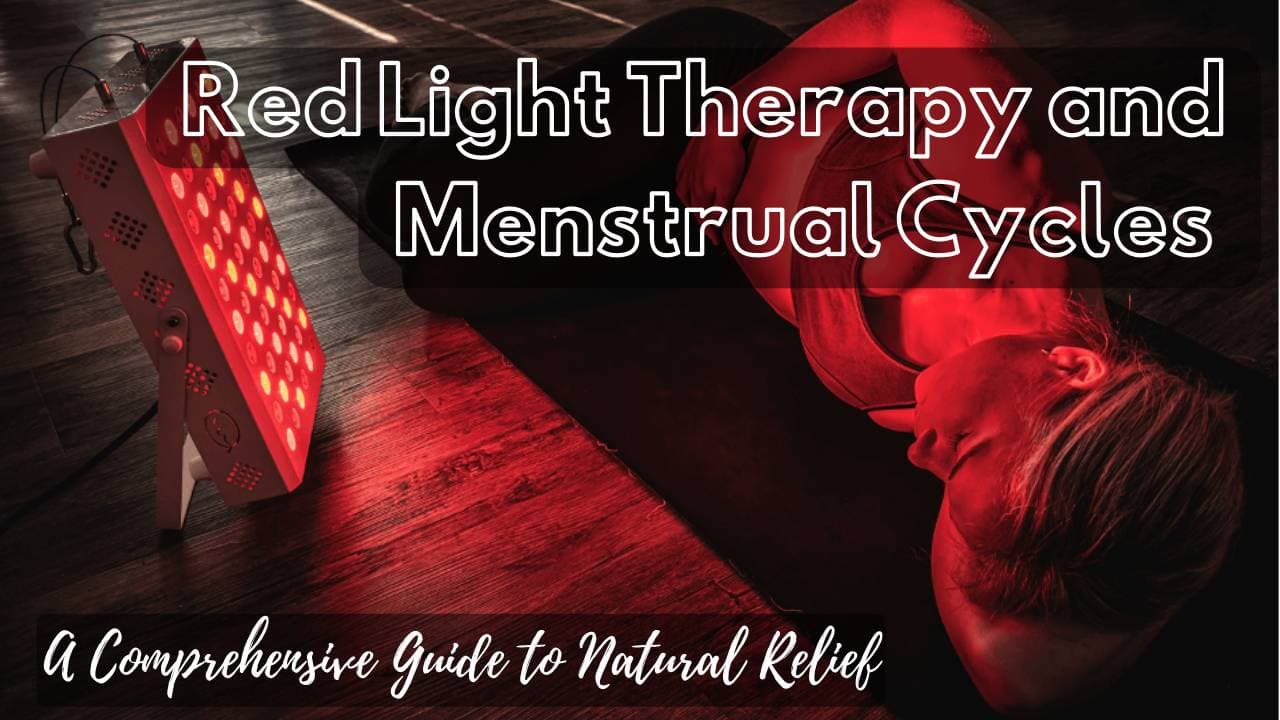
Red and near-infrared light are being studied across pain, recovery and skin health. Menstrual pain is one of the more interesting areas, but online claims often jump far beyond the research.
Small clinical trials have tested specific low-level light devices for primary dysmenorrhoea, the medical term for period pain without another identified pelvic condition. Some reported reduced pain. That does not prove that every red light panel, wavelength, dose or full-body session will produce the same result.
It also does not show that red light balances hormones, regulates the menstrual cycle, improves fertility or treats conditions such as endometriosis.
The important distinction: a study protocol is not a generic red light session
Photobiomodulation research depends on wavelength, power, dose, distance, treatment location and frequency. In some menstrual-pain trials, light was applied to specific points on the lower abdomen using a particular device and schedule.
A full-body wellness panel is not automatically equivalent. The fact that both approaches use red or near-infrared light does not make the dose or biological effect the same.
This is why R1SE should describe red light as a wellness and recovery experience, not as a proven menstrual treatment.
What the trials suggest
A randomized, double-blind, placebo-controlled trial involving women with primary dysmenorrhoea reported a greater reduction in pain with a self-adhesive low-level light device than with a dummy device. A later multicentre trial compared a defined LED protocol with an oral contraceptive and reported pain improvements in both groups, although the contraceptive produced the larger reduction in pain scores.
A 2025 systematic review found promising results across a small group of light-therapy trials, but also highlighted important limitations. Protocols varied, the number of studies was limited and many studies were concentrated in one region. The reviewers called for larger, standardized trials.
That is a signal worth following, not a reason to promise relief.
What has not been established
Current evidence does not establish that general red light sessions:
- balance oestrogen or progesterone
- regulate irregular cycles
- increase fertility
- treat endometriosis, adenomyosis, fibroids or pelvic inflammatory disease
- replace pain medication, contraception or clinical care
Menstrual pain can be common, but severe or changing pain deserves attention. The NHS advises seeking medical advice when pain is severe or worsening, disrupts normal activities, comes with heavier or irregular periods, occurs during sex or when using the toilet, or is accompanied by bleeding between periods.
If you want to use red light around your period
Think of it as an optional comfort or recovery practice, not a treatment plan.
- Follow the device and venue guidance.
- Keep expectations measured.
- Track pain and function rather than assuming every change is caused by the session.
- Stop if light exposure aggravates a condition or makes you feel unwell.
- Ask a healthcare professional if you are pregnant, take photosensitising medication, have a light-sensitive condition or are receiving treatment for a medical condition.
Do not delay an assessment for persistent or severe symptoms because a wellness intervention appears to offer a natural alternative.
The bottom line
Specific low-level light protocols have produced encouraging results for primary period pain in small trials. We cannot assume that those findings apply to every red light device or wellness session, and the evidence does not support claims about hormone balancing or treating menstrual conditions.
At R1SE, red light can be part of a calm, considered recovery routine. It should sit alongside good medical care, not compete with it.
Research behind this article
- Hong and colleagues. Randomized controlled trial of self-adhesive low-level light therapy in primary dysmenorrhoea, 2016.
- Zhu and colleagues. Low-level light therapy compared with an oral contraceptive for primary dysmenorrhoea, 2022.
- Choi and colleagues. Effectiveness and safety of light therapy for primary dysmenorrhoea, 2025.
- NHS guidance on period pain and when to seek medical advice.