Padel looks wonderfully accessible. The court is compact, the rallies start quickly and most new players can have fun within minutes. Then the game gathers pace.
You split-step, push sideways, reach for a low ball, rotate through a forehand and scramble backwards for a lob. A point later, you do it all again. That combination of rapid direction changes, repeated swings and reactive movement is exactly what makes padel addictive. It is also why walking straight onto court and hitting a few gentle shots is not much of a warm-up.
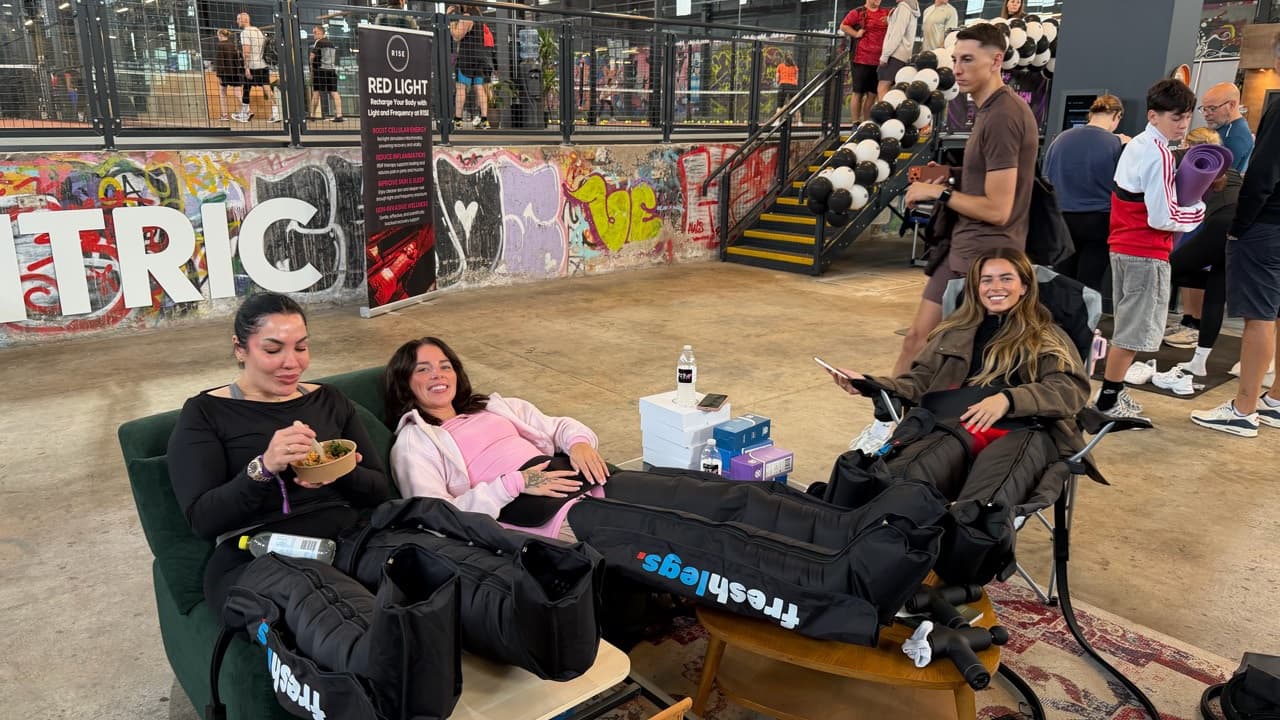
We saw the appetite for better preparation and recovery first-hand at the Fit AF Festival at Club de Padel Sheffield on 12 September 2026. R1SE Recovery on the Road brought Visbody assessment and Fresh Legs compression into the heart of the action, giving players a chance to look at how they move, recover between games and prepare for the next session.
The lesson was simple: padel may feel social, but your body still treats it like a sport.
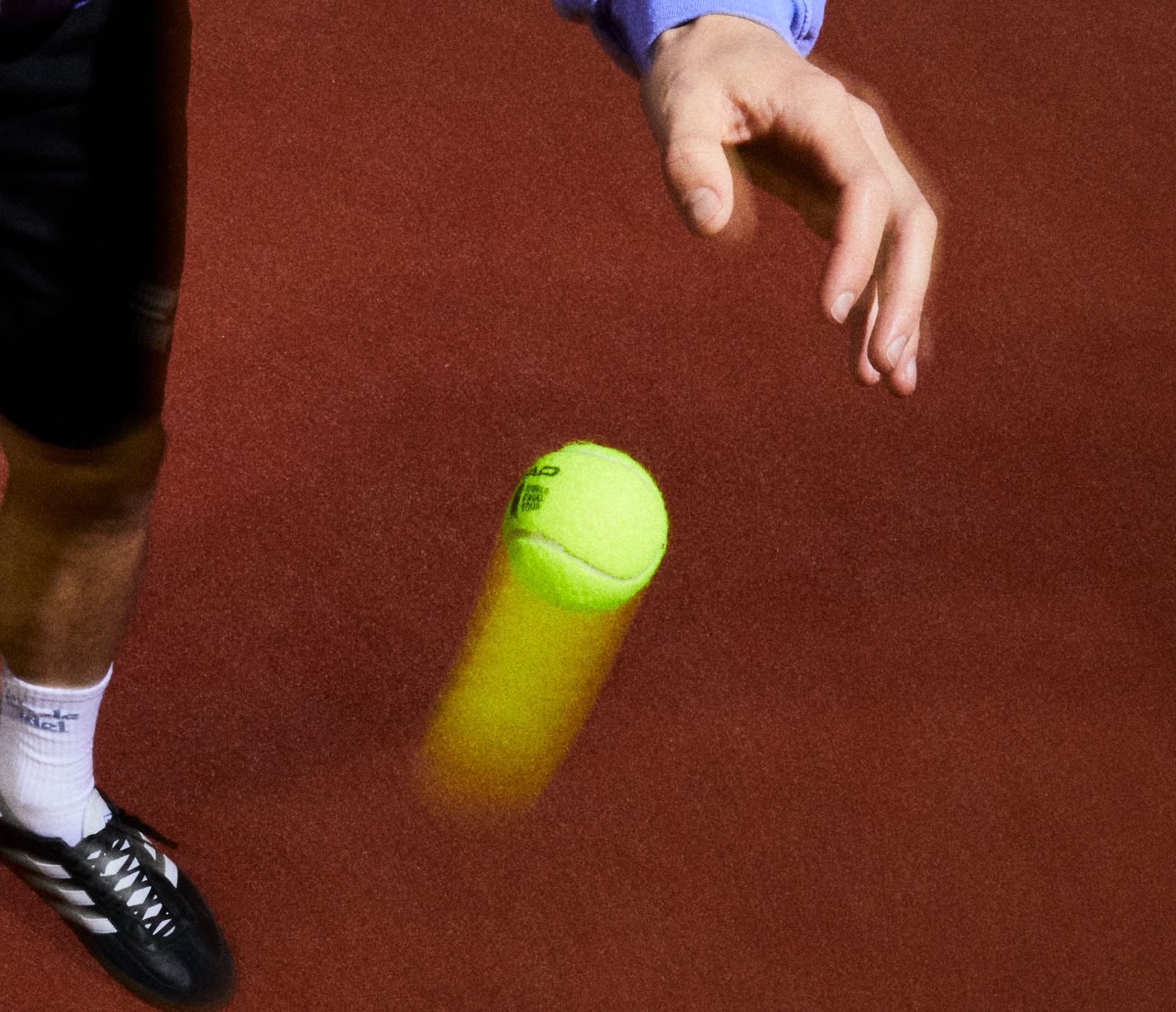
Club de Padel Sheffield. Image: Club de Padel.
What padel asks from your body
Padel is a high-intensity, intermittent game. You repeatedly accelerate, brake and change direction in a relatively small space. Your calves and ankles manage quick adjustment steps. Your hips and trunk produce rotation. Your shoulder, forearm and elbow control every volley, smash and off-balance return.
That pattern explains why simply stretching your hamstrings does not prepare you for the court. A systematic review of padel injuries found that the elbow was the most commonly reported area, followed by the knee, shoulder and lower back. Tendon and muscle problems were the most frequent injury types. Another review highlighted rapid actions and sudden changes of direction as important demands, particularly for less-trained players.
This does not mean padel is dangerous. It means the warm-up should resemble the game you are about to play.
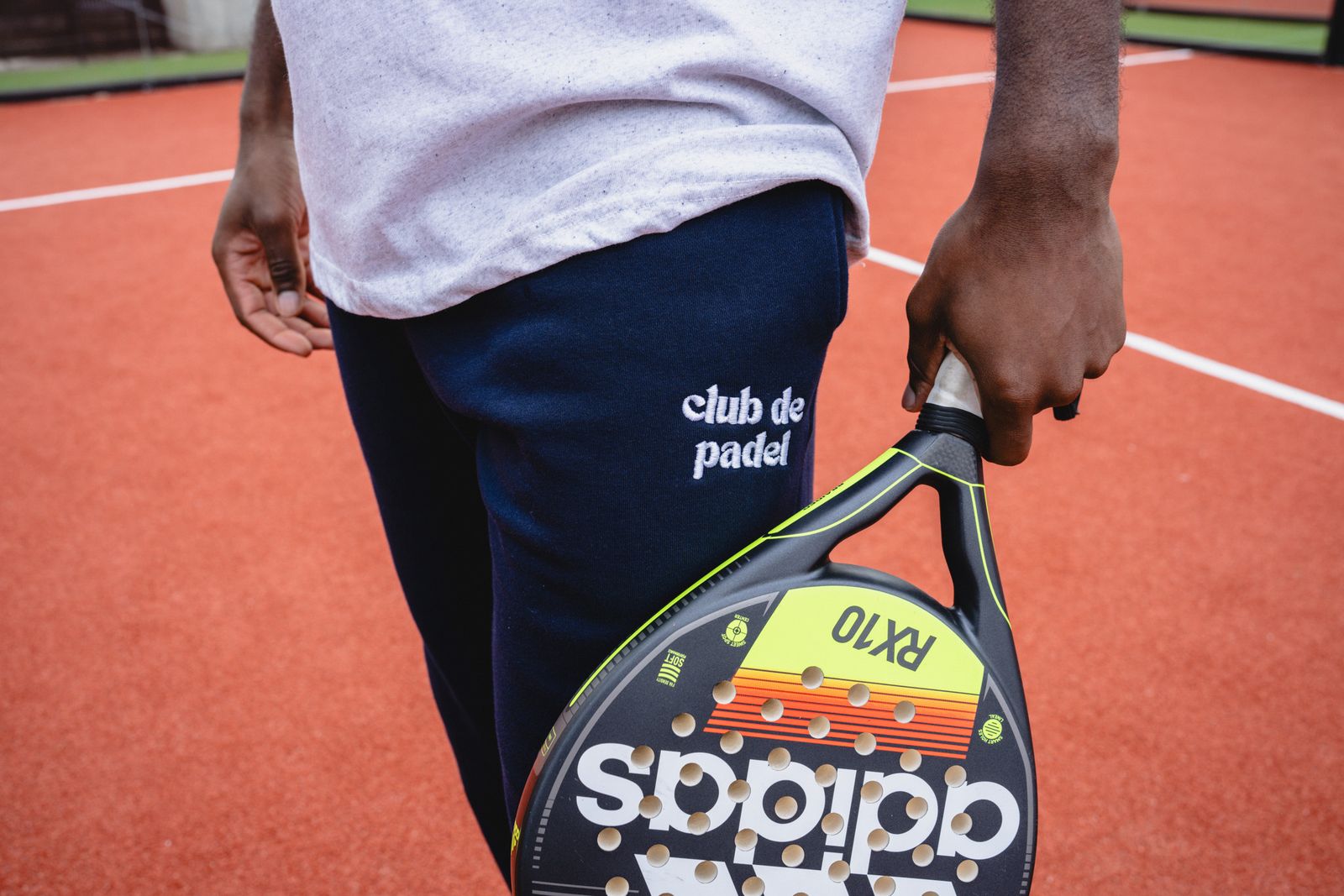
Image: Club de Padel.
Your seven-minute padel warm-up
Save the long, relaxed stretches for later. Before a match, the aim is to raise your temperature, open useful ranges of movement and wake up the exact patterns you will need on court.
1. Move around the court: 60 seconds
Start with a brisk walk or easy jog, then add side shuffles in both directions. Stay light on the balls of your feet and gradually increase the speed.
This is the switch from everyday movement to court movement. You are raising your temperature and reminding your body that the next hour will happen forwards, backwards and sideways.
2. Wake up your ankles and calves: 60 seconds
Alternate ten controlled calf raises with ankle rocks, driving one knee forwards over the toes while keeping the heel down. Change sides, then finish with a few gentle pogo bounces if jumping feels comfortable.
Padel rewards quick feet. An ankle that can move and a calf that is ready to absorb force give you a better base for the first step.
3. Open the hips: 75 seconds
Perform alternating reverse lunges, then add a shallow lateral lunge to each side. Keep the knee tracking in line with the foot and move only as deeply as you can control.
Think movement, not maximum stretch. You are preparing to lower your centre of gravity, reach for wide balls and push back towards the middle.
4. Rotate through the upper back: 60 seconds
Stand in an athletic position with soft knees. Hold your hands together in front of your chest and rotate smoothly from side to side, allowing the ribs and upper back to turn while the hips remain controlled. Gradually make the movement larger.
Good rotation is shared through the body. If the upper back contributes, the lower back and hitting shoulder do not have to manufacture the whole swing alone.
5. Prepare the shoulders: 60 seconds
Begin with small arm circles and build to larger circles in both directions. Follow with ten slow shoulder-blade squeezes and ten controlled reaches overhead. Keep the neck relaxed.
The aim is not to exhaust the shoulder. It is to make the shoulder blade, upper back and arm work together before the pace rises.
6. Rehearse the game: 90 seconds
Pick up your racket. Perform relaxed shadow forehands, backhands and overheads, starting at half speed. Finish with short split-steps and two or three quick movements towards each corner.
Your final warm-up movements should look like padel. Research consistently supports a progression from general movement to dynamic mobility and then sport-specific action. By the end, you should feel warmer, sharper and ready, not tired.
The cool-down has a different job
A warm-up prepares you to produce force quickly. A cool-down helps you move out of match mode. Do not use the same tempo for both.
Walk for two minutes while your breathing settles. Then spend five to eight minutes on the areas that have worked hardest: a supported calf stretch, a half-kneeling hip-flexor stretch, a gentle upper-back rotation and a cross-body shoulder stretch. Breathe normally and stay away from pinching or sharp pain.
Longer static stretches can improve flexibility when used consistently, but no stretch can replace sleep, food, hydration or well-planned training. Treat the cool-down as a useful transition, not a magic repair routine.

Assess rather than guess
The Visbody assessment at Fit AF gave players a quick, visual baseline rather than another vague instruction to “get fitter”. Seeing body measurements and posture-related information can make the next step more concrete.
Assessment is not diagnosis, and one scan does not determine how well somebody will play. Its value is in creating a repeatable starting point. Combine it with the things you notice on court. Do you struggle to brake on one side? Does your shoulder tire during overheads? Can you rotate comfortably in both directions? Those observations help turn general exercise into purposeful training.
Recovery should help you come back ready
At the activation, players also used Fresh Legs intermittent pneumatic compression between the action. The sleeves inflate and release in sequence around the legs, creating a relaxing pressure cycle while the player sits back.
The evidence suggests compression boots can provide a small benefit for muscular function and may reduce perceived soreness for some people. Just as importantly at an event or tournament, they create a deliberate recovery window. You stop, rehydrate and allow the intensity to come down instead of standing around until the next match.

Build the basics around any recovery technology:
- Replace fluids after a hot or demanding session.
- Eat enough carbohydrate and protein to support the work you have done.
- Protect your sleep, especially during competitions or busy playing weeks.
- Avoid turning every social game into an all-out test.
- Give persistent elbow, shoulder, knee or back pain proper attention rather than repeatedly playing through it.
Build a body that is ready for padel
The seven-minute routine prepares you for today’s match. Your weekly training determines how well your body handles the next hundred.
Reformer Pilates can develop controlled trunk strength, single-leg stability and shoulder organisation. Yoga can build usable mobility and body awareness. Strength work can improve your ability to decelerate, push laterally and tolerate repeated swings. Recovery sessions help you manage the workload so enthusiasm does not outrun capacity.
That is the bigger idea behind R1SE for padel players. Better movement is not about becoming cautious. It gives you more freedom to chase the ball, commit to the shot and keep playing the sport you enjoy.
R1SE Recovery on the Road
Fit AF at Club de Padel showed what happens when recovery comes to the players. Instead of talking about performance in the abstract, people could assess, experience and ask questions while surrounded by the sport itself.
R1SE Recovery on the Road takes that activation model to clubs, workplaces, teams and events across Sheffield. We bring practical recovery experiences into the places where people train, compete and work.
For your own game, start with the seven-minute warm-up before your next match. Then explore R1SE’s padel performance and recovery options when you are ready to build the strength, movement and recovery habits behind it.
References
- Incidence, prevalence and nature of injuries in padel: a systematic review
- Match analysis, physical training, risk of injury and rehabilitation in padel
- Effects of different warm-up methods on lower-limb explosive strength
- International Tennis Federation: Conditioning and fitness training
- Effects of lower-limb intermittent pneumatic compression on sports recovery