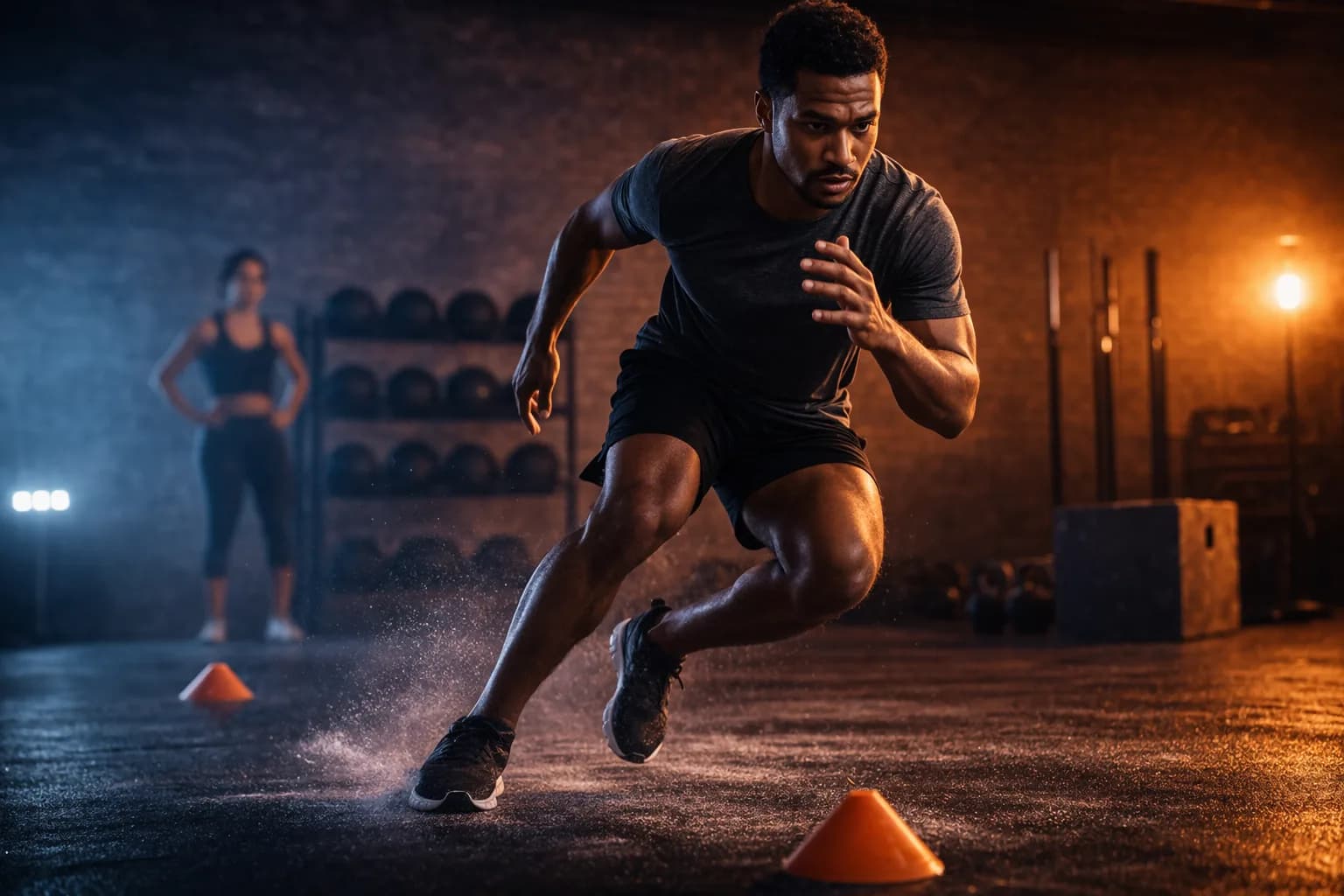
Obstacle Course Racing
Mud. Walls. Fire. We prepare you for all of it.
Obstacle Course Racing - Tough Mudder, Spartan Race, Total Warrior - demands a brutal combination of running endurance, upper body strength, grip endurance, mental toughness, and the ability to keep performing when cold, wet, and exhausted. At R1SE Sheffield, we combine Reformer Pilates, Aerial Yoga, Hot Yoga, HBOT, Fire & Ice, and Compression Therapy to build the OCR-specific fitness and recovery that generic gym training cannot provide.
OCR athletes face unique challenges: cold water immersion during the race that saps grip strength and coordination, obstacles demanding pulling strength most runners lack, terrain that destroys ankles and knees, and the cumulative fatigue of 10-20km with 20-30 obstacles. R1SE's multi-therapy approach addresses every element. Aerial Yoga builds the grip endurance, pulling strength, and overhead confidence obstacles demand. Fire & Ice trains your body to perform in cold water - because race day should not be your first time in ice. Reformer Pilates builds the core stability and single-leg strength that muddy, uneven terrain requires. HBOT accelerates recovery from the deep tissue damage that OCR racing inflicts.
Your Multi-Therapy Plan
How R1SE Can Help
The Science
Evidence-based insights supporting our approach.
Obstacle Course Racing has grown to over 5 million annual participants globally, with Tough Mudder and Spartan Race collectively hosting events across 40+ countries. The UK OCR community is one of the largest in Europe.
Cold water immersion during OCR events reduces grip strength by 30-60% within minutes, and unprepared athletes lose fine motor coordination rapidly. Regular cold water training (as in Fire & Ice) significantly reduces this performance decrement through cold acclimatisation (Castellani & Young, 2016, Comprehensive Physiology).
Grip endurance - the ability to maintain grip under fatigue - is the #1 predictor of OCR obstacle completion rates. Aerial Yoga builds sustained grip endurance under body weight load for 60 minutes per session, far exceeding the grip demands of any single OCR obstacle.
OCR athletes have a musculoskeletal injury rate of 17-23% per event, with ankle sprains (28%), shoulder injuries (22%), and knee injuries (18%) most common. Proprioceptive training and mobility work reduce these rates by up to 50% (Cosio-Lima et al., 2019, Journal of Sports Sciences).
HBOT accelerates healing of the tendinopathies that repeated grip-intensive obstacles create - particularly in the forearm extensors and flexors. Oxygen-rich plasma supports tendon collagen synthesis and reduces the inflammatory oedema that slows repair.
Common Questions
Loading form...
You May Also Be Interested In
Ready to Start?
Whether you want to book a session, explore our recovery therapies, or speak to someone about a personalised plan - we are here for you.