Running
Run further. Recover faster.
Whether you are training for your first 5K or chasing a marathon PB, what you do between runs matters as much as the miles themselves. R1SE Sheffield gives runners the recovery, mobility, and cross-training that prevents injury and unlocks performance.
Running injuries are almost entirely preventable - and almost universally experienced. The best epidemiology puts lower-extremity injury rates at 20-80% of runners per year depending on experience and volume, with hamstring strains, IT-band syndrome, patellofemoral pain, Achilles tendinopathy and plantar fasciitis dominating. The modifiable risk factors are remarkably consistent across the sports-medicine literature: inadequate hip and glute strength (the number-one predictor), limited ankle dorsiflexion, poor single-leg balance, insufficient recovery between hard sessions, and training-load spikes that exceed tissue adaptation capacity. Elite marathoners and hobby runners both benefit from the same recovery stack - compression, contrast therapy, photobiomodulation, targeted strength work - because the physiology is identical at every level. At R1SE we build runners' week around two principles: train hard, recover deliberately, then add the cross-training (glutes, core, hip mobility) that running alone cannot provide.
Your Multi-Therapy Plan
How R1SE Can Help
The Science
Evidence-based insights supporting our approach.
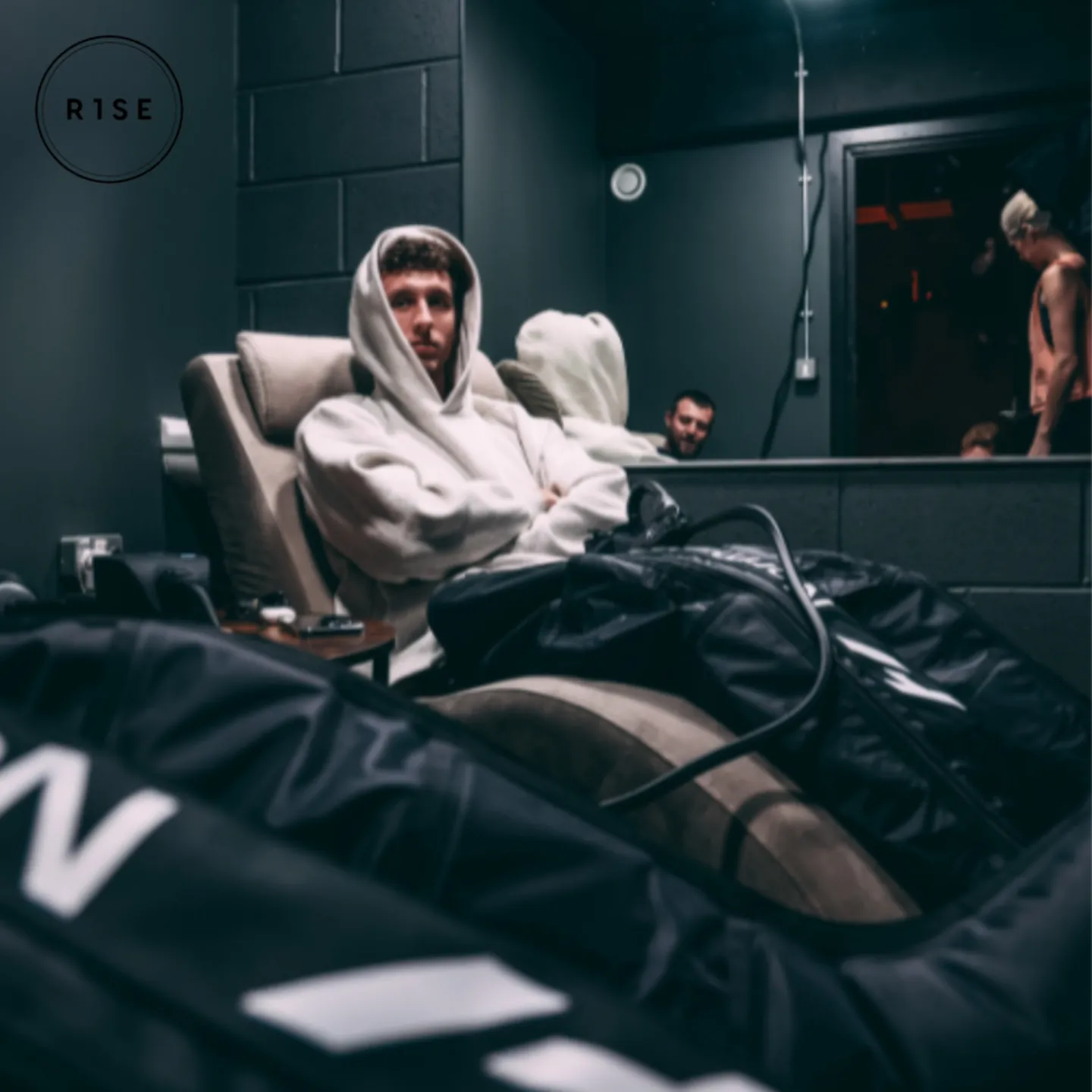
A 2016 meta-analysis in the British Journal of Sports Medicine (Hill et al.) found compression garments significantly reduce markers of muscle damage and perceived soreness post-exercise, and accelerate recovery of maximal strength and explosive power - the science behind why elites use pneumatic compression after every hard session.
Strength training reduces overall running injury incidence by approximately 33-50% (Lauersen et al., 2018, BJSM), with glute and hip strengthening the single most protective intervention. Reformer Pilates is a high-adherence, injury-specific format for this.
A Cochrane review (Bleakley et al., 2012) concluded contrast water therapy reduces delayed-onset muscle soreness and accelerates recovery compared to passive rest - the principle behind our Fire & Ice experience, now a staple of elite endurance-athlete recovery.
Yoga practice reduces running injury rates by improving flexibility, proprioception and single-leg stability - the three most modifiable risk factors identified in running injury epidemiology (van Mechelen, 1992, BJSM and subsequent reviews).
Hip-strengthening protocols reduce patellofemoral pain (the most common running injury) by approximately 50% compared to quadriceps-only training (Santos et al., 2015, JOSPT). The glute-focused Reformer work directly targets this pattern.
Heat-shock protein upregulation from regular sauna use or hot yoga improves heat tolerance, reduces cardiovascular strain at submaximal paces, and accelerates post-exercise recovery (Scoon et al., 2007, Journal of Science and Medicine in Sport) - a measurable performance-enhancing effect.
Common Questions
Loading form...
You May Also Be Interested In
Ready to Start?
Whether you want to book a session, explore our recovery therapies, or speak to someone about a personalised plan - we are here for you.