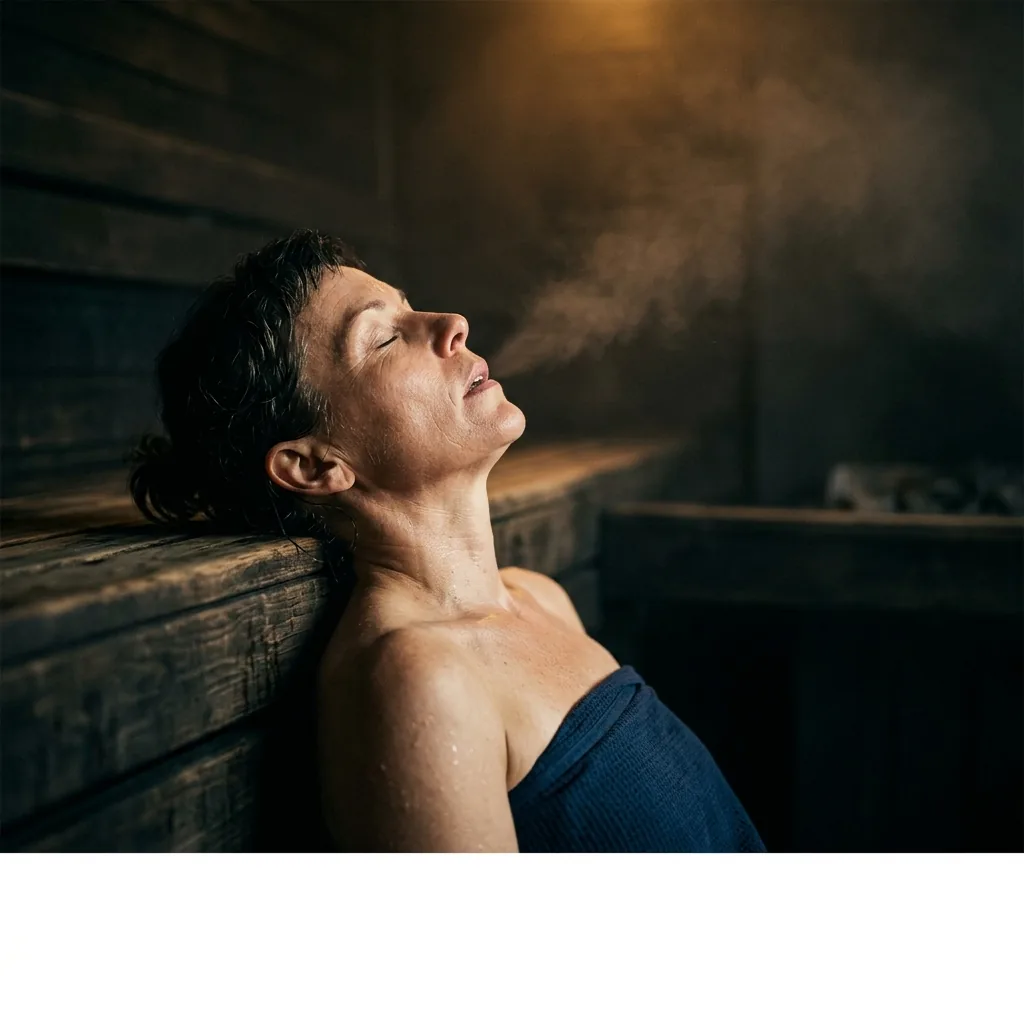
Stress & Burnout
From chaos to calm.
When your nervous system is stuck in overdrive, you need more than rest - you need active recovery. R1SE Sheffield's combination of controlled stress exposure, breathwork, and deep recovery resets your nervous system and rebuilds your resilience from the inside out.
Burnout is not simply 'being tired' - the World Health Organization now classifies it as a syndrome with three measurable dimensions: exhaustion, cynicism/depersonalisation, and reduced professional efficacy. Physiologically it manifests as chronic HPA-axis dysregulation (initially high cortisol, later blunted), persistent sympathetic nervous-system overactivation, suppressed parasympathetic tone (low heart-rate variability), disrupted sleep architecture, and often low-grade neuroinflammation. This is why simply 'resting' rarely resolves burnout - the nervous system has learned a hyperaroused state and needs active retraining to recover. The evidence-based interventions are consistent: controlled hormetic exposures (heat, cold, exercise) that build stress tolerance, practices that explicitly train parasympathetic tone (breathwork, yoga, vagal stimulation), and the sleep-restoration that most burnout sufferers are missing. At R1SE we combine Fire & Ice (for hormetic resilience-building and dopamine-driven mood reset), Hot Yoga and breathwork (for parasympathetic retraining), Red Light (for cortisol reduction and sleep), and Compression (for somatic downshift) - the exact stack burnout-recovery research supports.
Your Multi-Therapy Plan
How R1SE Can Help
The Science
Evidence-based insights supporting our approach.
Cold water immersion activates the sympathetic nervous system in a controlled, time-limited way - building stress resilience through hormesis (Mooventhan & Nivethitha, 2014, North American Journal of Medical Sciences). Regular exposure raises baseline heart-rate variability and reduces reactivity to everyday stressors.
A single cold exposure produces a 250-530% sustained increase in dopamine (Šrámek et al., 2000, European Journal of Applied Physiology) - effects lasting 2-3 hours and measurably improving mood, focus and motivation. This is the 'reset' effect burnout sufferers often report.
Regular sauna use (4-7 sessions per week) has been associated with 40% reduction in all-cause mortality, lower rates of cardiovascular disease, and reduced dementia risk in large Finnish cohort studies (Laukkanen et al., 2015, JAMA Internal Medicine).
Yoga-based interventions reduce cortisol by 10-30% in stressed populations and measurably improve heart-rate variability - both markers of parasympathetic dominance (Pascoe et al., 2017, Psychoneuroendocrinology). In healthcare worker burnout trials, yoga reduces emotional exhaustion scores meaningfully within 8 weeks.
Burnout is now classified by WHO (ICD-11) as an occupational syndrome with three dimensions: exhaustion, cynicism, and reduced professional efficacy - all of which have measurable physiological correlates (HPA dysregulation, low HRV, disrupted sleep) that respond to lifestyle intervention.
Hormesis - the biological principle that controlled low-dose stressors make organisms more resilient to larger stressors - is the mechanistic framework behind contrast therapy, heat acclimation, and mindful exercise. Rebuilds stress tolerance rather than shielding from stress.
Common Questions
Loading form...
You May Also Be Interested In
Ready to Start?
Whether you want to book a session, explore our recovery therapies, or speak to someone about a personalised plan - we are here for you.