Cancer Support
Strength beside you.
Important: R1SE services are complementary wellness support, not medical treatment. Always consult your healthcare provider before starting any new programme, especially if you are under active medical care.
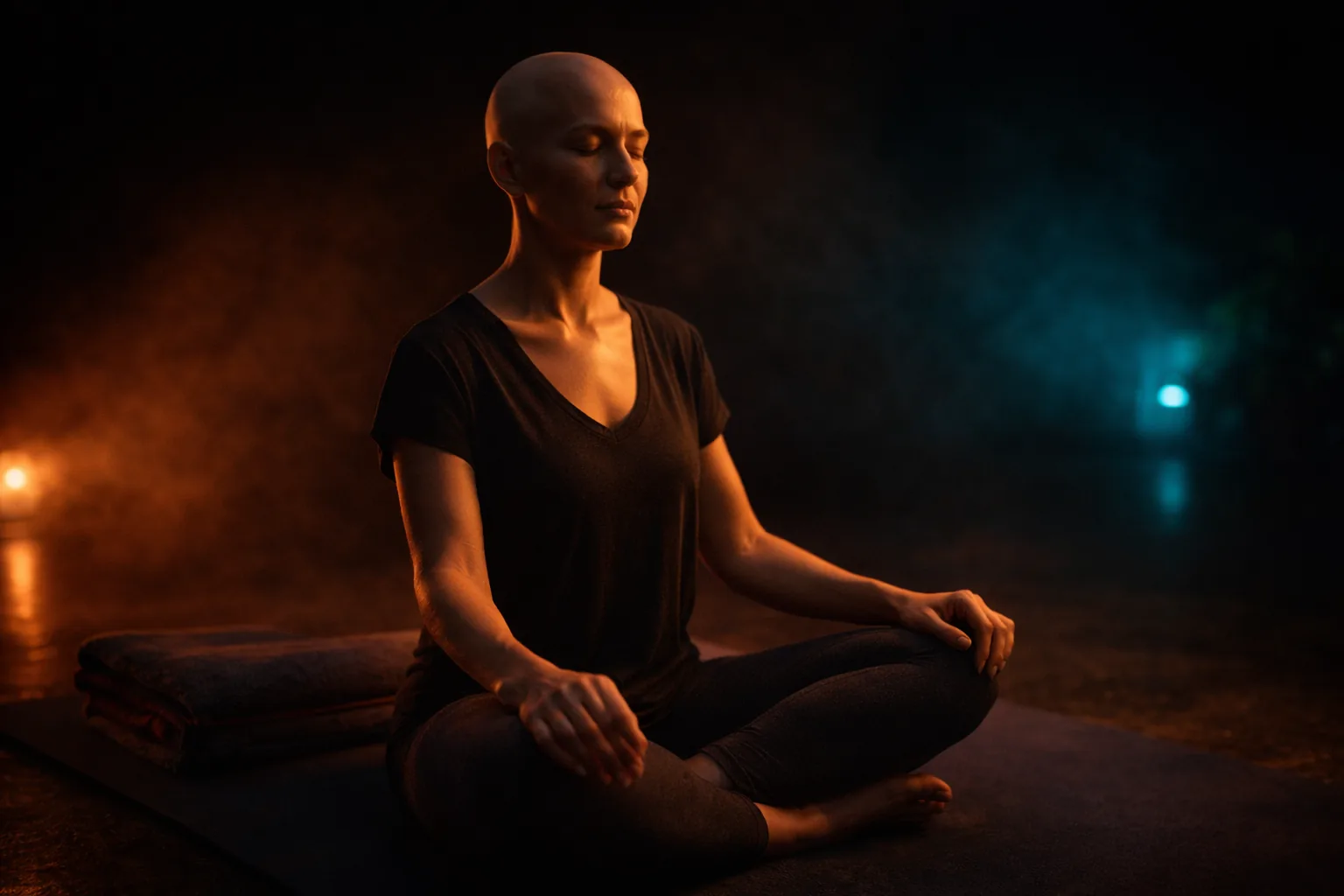
A cancer diagnosis changes everything. R1SE is not, and never claims to be, a cancer treatment - but the evidence is now overwhelming that the right kind of movement, recovery, and community alongside oncology care can reduce treatment side effects, preserve physical function, lift mental health, and improve survival. Whatever stage you are at - newly diagnosed, mid-treatment, post-treatment, or living with secondary cancer - there is a way to use R1SE that supports you.
Cancer Research UK, Macmillan, the World Cancer Research Fund and NICE all now position physical activity and supportive recovery therapies as core, evidence-based components of cancer care - on par with traditional symptom-management medicines for fatigue, anxiety, neuropathy, lymphoedema and reconditioning. The clinical question is no longer whether to exercise during and after cancer; it is how to do it safely, gently, and at the right intensity for the person in front of us. R1SE Sheffield is built for exactly that. Every plan is collaborative, paced to your treatment cycle and energy, and explicitly designed to be modified up or down on the day. Our team works alongside (never instead of) your oncology, lymphoedema, physiotherapy, mental-health, and palliative-care teams. We will always ask you to clear participation with your clinicians first, and we will always communicate openly with them at your request. The aim is simple: give you a safe, expert, science-backed environment in which to keep showing up for yourself - on the days that feels possible, and exactly as gently as your body needs.
Your Multi-Therapy Plan
How R1SE Can Help
The Science
Evidence-based insights supporting our approach.
Cancer Research UK and Macmillan both recommend keeping as active as possible during and after treatment. A 2018 American College of Sports Medicine roundtable found exercise during treatment reduces cancer-related fatigue by 25-35% - more than any pharmacological intervention.
A 2020 meta-analysis in the British Journal of Sports Medicine (Patel et al.) found higher physical activity levels were associated with 18% lower cancer-specific mortality and 21% lower all-cause mortality after diagnosis - the dose-response held for breast, bowel, and prostate cancers.
Cochrane reviews consistently find yoga improves anxiety, depression, fatigue, and sleep quality in people with cancer - with effect sizes comparable to standard psychological interventions and no reported serious adverse events.
Photobiomodulation is recommended by MASCC and the International Society of Oral Oncology as standard of care for prevention and treatment of oral mucositis in head/neck cancer and stem-cell transplant patients.
The Lymphoedema Framework (UK) recognises pneumatic compression as a core component of complex decongestive therapy for cancer-related lymphoedema, used alongside manual lymphatic drainage and compression garments.
Resistance training (such as Reformer Pilates) is now a NICE-supported intervention for women on aromatase inhibitors - it slows hormonal-therapy-driven bone loss and reduces musculoskeletal symptoms that cause many women to stop their endocrine therapy early.
A 2021 RCT in Aging (Hachmo et al.) using HBOT in older adults showed measurable improvements in cognitive function, telomere length and senescent cell counts - offering a mechanistic basis for studying HBOT in chemotherapy-induced cognitive impairment.
The PEACE Programme (NHS England, 2022) explicitly names supervised exercise, mind-body practice and recovery therapies as evidence-based components of personalised cancer care, alongside surgery, chemotherapy, radiotherapy and immunotherapy.
Supervised exercise during chemotherapy has been shown to reduce dose reductions and treatment delays - meaning you complete more of your prescribed treatment, on time. (Mijwel et al., Acta Oncologica 2018.)
Cancer-related cognitive impairment ('chemo brain') affects 30-75% of patients during and after treatment. Aerobic activity, mindfulness, and yoga have the best evidence of any intervention for it (Hartman et al., 2018, JAMA Network Open).
Common Questions
Loading form...
You May Also Be Interested In
Ready to Start?
Whether you want to book a session, explore our recovery therapies, or speak to someone about a personalised plan - we are here for you.