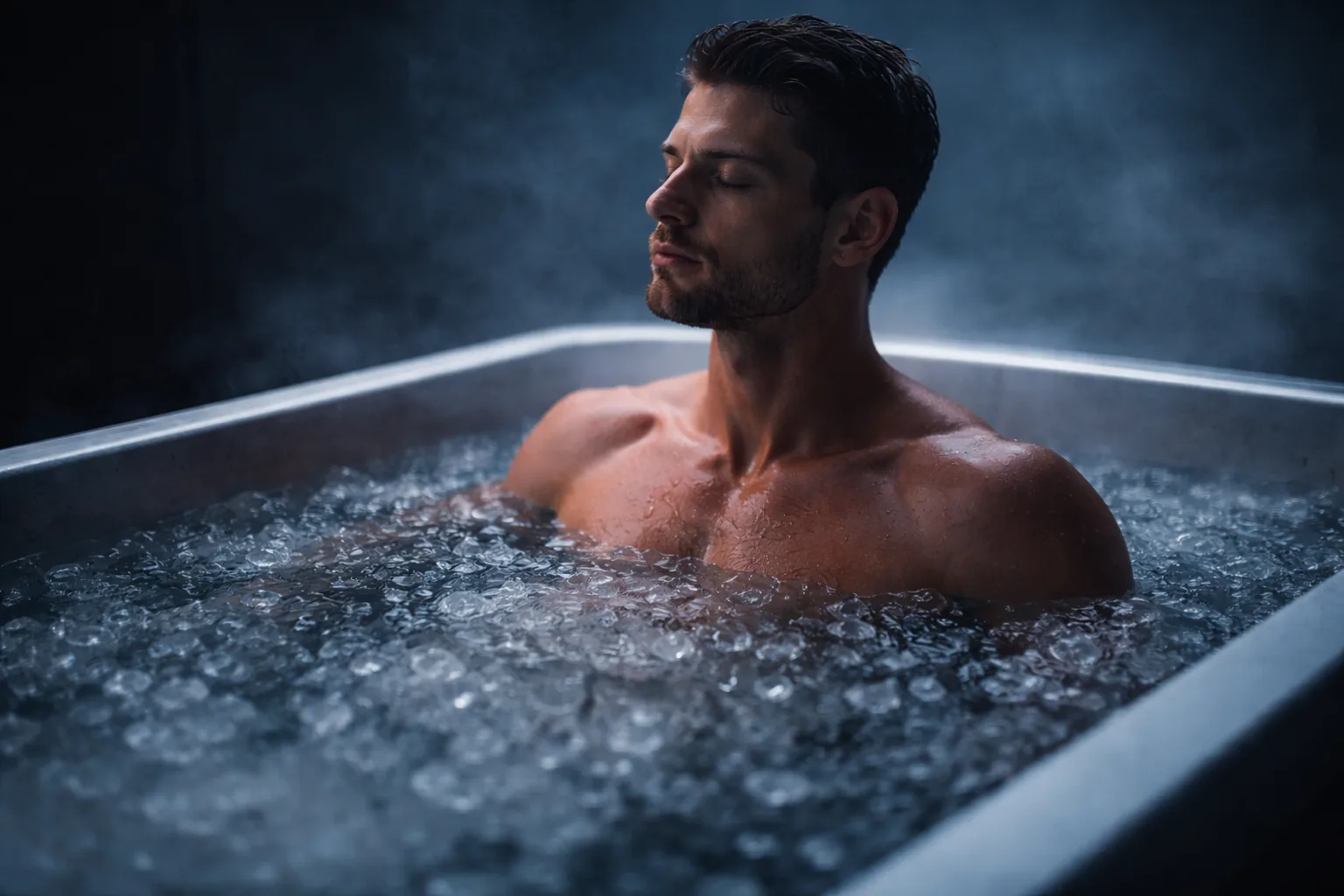
Cold Exposure
The science is cold. The benefits are not.
Cold exposure - ice baths, cold plunge, and cold water immersion - has moved from fringe biohacking to mainstream science, driven by a growing body of evidence showing powerful effects on dopamine, norepinephrine, inflammation, metabolism, immune function, and mental resilience. At R1SE Sheffield, we offer cold plunge as part of our Fire & Ice contrast therapy protocol - combining the benefits of cold with the complementary effects of infrared sauna for the most comprehensive hormetic stress response available.
The neuroscience of cold is remarkable. A single cold exposure increases dopamine by 250% and norepinephrine by 530% - sustained for 2-3 hours. These are not marginal effects; they rival pharmacological interventions. Dopamine drives motivation, focus, and mood. Norepinephrine drives alertness, attention, and has powerful anti-inflammatory properties. Cold also triggers mitochondrial biogenesis (building new, more efficient cellular powerhouses), activates brown fat (improving metabolic health), and produces cold shock proteins including RBM3 (which may protect against neurodegeneration). At R1SE, we combine cold exposure with sauna in our Fire & Ice protocol - adding heat shock proteins, growth hormone release, and cardiovascular conditioning to the cold's benefits.
Your Multi-Therapy Plan
How R1SE Can Help
The Science
Evidence-based insights supporting our approach.
Cold water immersion at 14 degrees for 1 hour increases dopamine by 250% - sustained for 2-3 hours post-exposure. This is a larger and longer-lasting effect than caffeine and comparable to some pharmacological stimulants (Sramek et al., 2000, European Journal of Applied Physiology).
Cold exposure increases norepinephrine by 200-530%, depending on temperature and duration. Norepinephrine is both a neurotransmitter (driving alertness and focus) and a powerful anti-inflammatory mediator - reducing TNF-alpha production by up to 40%.
Regular cold exposure triggers mitochondrial biogenesis through PGC-1alpha activation - literally building new, more efficient mitochondria. Mitochondrial dysfunction is one of the nine hallmarks of biological ageing (Lopez-Otin et al., 2013, Cell).
Cold activates brown adipose tissue (BAT), which burns glucose and fat for heat production. Regular cold exposure increases BAT volume and activity, improving insulin sensitivity and metabolic rate (van Marken Lichtenbelt et al., 2009, New England Journal of Medicine).
Cold shock protein RBM3, triggered by cold exposure, protects synapses and promotes synaptic regeneration in animal models. This has led researchers to investigate cold exposure as a potential neuroprotective intervention for Alzheimer's and Parkinson's (Peretti et al., 2015, Nature).
Post-exercise cold water immersion reduces CRP by 20%, IL-6 by 30%, and perceived muscle soreness by 40% - making it one of the most effective acute recovery interventions for athletes (Machado et al., 2016, Sports Medicine - systematic review of 36 studies).
Deliberate cold exposure improves heart rate variability (HRV) - the gold standard biomarker of autonomic nervous system health and recovery readiness. Higher HRV is associated with lower cardiovascular risk, better stress resilience, and improved emotional regulation.
The contrast therapy protocol (hot then cold, as in R1SE's Fire & Ice) produces greater cardiovascular training stimulus than either modality alone - alternately dilating and constricting blood vessels in a 'vascular gymnastics' effect that improves endothelial function.
Common Questions
Loading form...
You May Also Be Interested In
Ready to Start?
Whether you want to book a session, explore our recovery therapies, or speak to someone about a personalised plan - we are here for you.