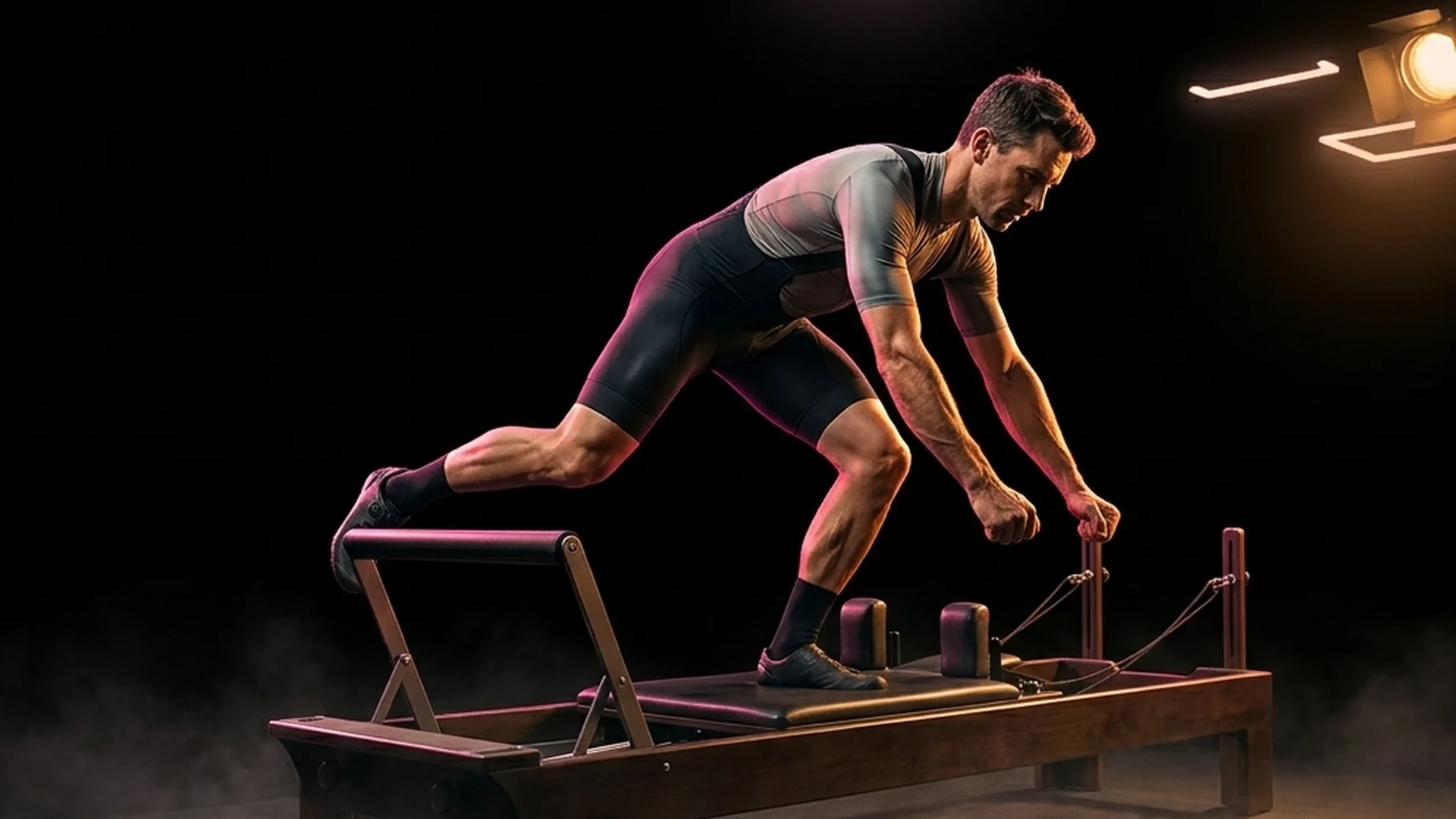
Cycling
Pedal. Recover. Repeat.
Cycling creates a uniquely repetitive load - thousands of identical pedal strokes creating tightness, imbalance, and postural issues that eventually limit performance or cause injury. R1SE Sheffield provides the recovery, mobility, and corrective training that every cyclist needs but few invest in.
Cycling is mechanically and physiologically distinctive: thousands of identical pedal strokes across a narrow movement pattern, hours locked in a hip-flexed position, quads doing the heavy lifting while glutes are under-recruited, and thoracic spine held in sustained flexion over the handlebars. The predictable consequence is a well-documented set of cyclist-specific dysfunctions: shortened hip flexors, weak glutes (particularly gluteus medius), locked thoracic spine, anterior pelvic tilt, tight hamstrings, and forward head posture. These don't just cause back and neck pain - they directly limit power output, because weak glutes can't contribute to the push phase and restricted thoracic rotation compromises the stable base needed for efficient pedalling. The sports-science literature is consistent: hip mobility and glute strength are the two highest-yield interventions for cyclists. At R1SE we combine Hot Yoga (for hips, hamstrings and thoracic extension), Reformer Pilates (for glute activation and core control), Compression (for lactate clearance after hard rides), and Fire & Ice (for plasma volume and systemic recovery) - addressing every major modifiable performance limit cycling creates.
Your Multi-Therapy Plan
How R1SE Can Help
The Science
Evidence-based insights supporting our approach.
Cyclists have some of the tightest hip flexors and weakest glute medius function of any athletes (Hagins & Lamberg, 2014) - directly contributing to back pain, lateral knee pain (ITBS), and limited power transfer in the push phase.
A landmark New Zealand study (Scoon et al., 2007, JSCM) found 3 weeks of regular sauna use increased plasma volume by 7% and improved time-trial performance by 1.9% in trained cyclists - a rare ergogenic aid available through lifestyle practice.
Glute activation exercises and hip strengthening improve cycling power output measurably (Wirth et al., 2012) and reduce the knee injury risk common in high-mileage riders. Reformer Pilates delivers this without compromising training quality.
Pneumatic compression reduces cycling-specific DOMS and improves next-day 5km TT performance in repeated-effort protocols (Hamlin et al., 2012, IJSPP) - the same technology used by Team Sky, INEOS, and Jumbo-Visma for between-stage recovery.
Core and lumbopelvic strength correlate with sustained power output at threshold (Abt et al., 2007, JSCR) - addressing the cycling-specific weakness through Reformer-based training improves functional threshold power (FTP) independent of on-bike training.
Thoracic mobility limitations reduce cycling efficiency by increasing oxygen cost of breathing at submaximal intensity (Bishop & Spencer, 2004). Hot yoga's thoracic extension work directly addresses this and improves aerobic efficiency on the bike.
Common Questions
Loading form...
You May Also Be Interested In
Ready to Start?
Whether you want to book a session, explore our recovery therapies, or speak to someone about a personalised plan - we are here for you.