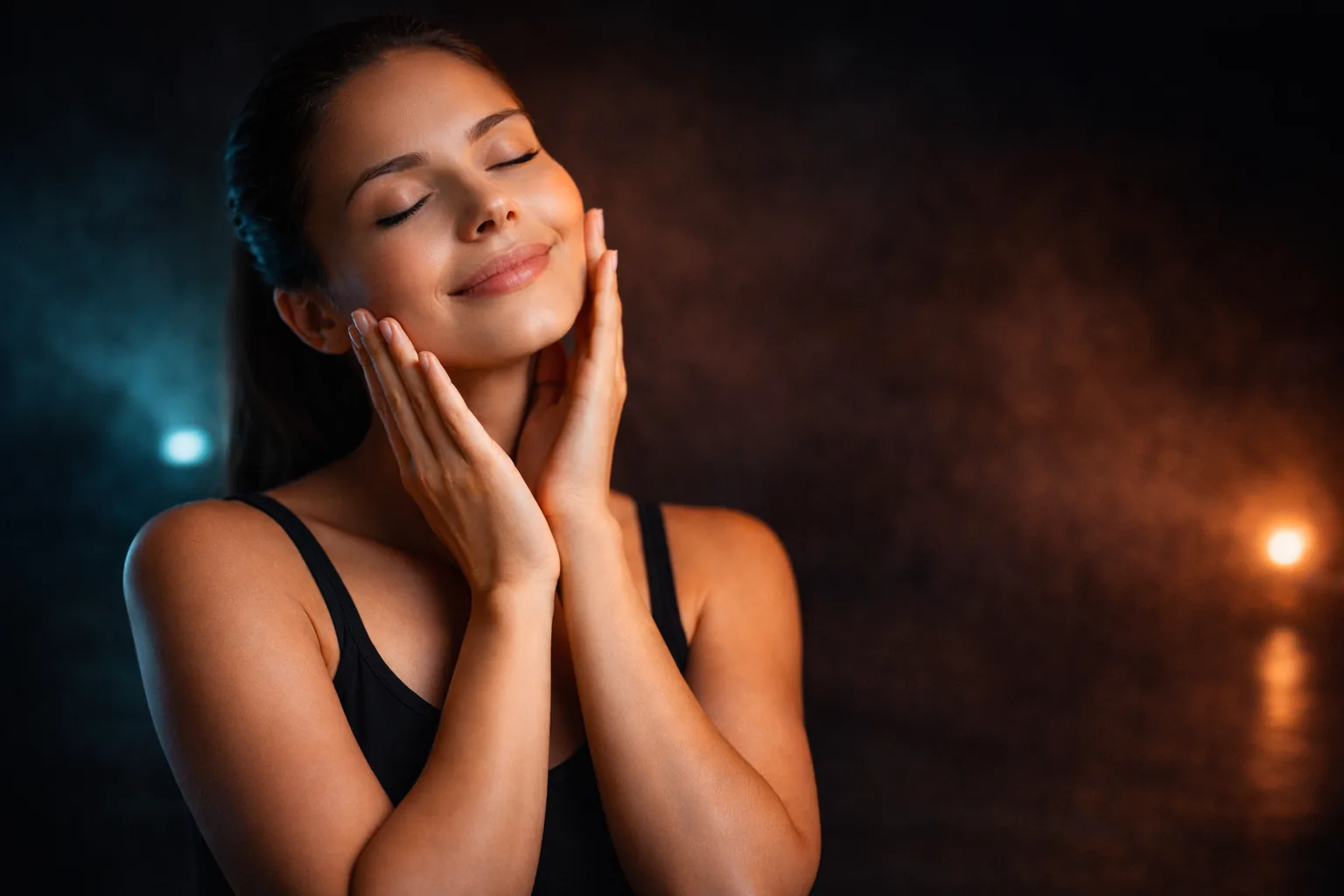
Eczema & Psoriasis
Heal from within.
Important: R1SE services are complementary wellness support, not medical treatment. Always consult your healthcare provider before starting any new programme, especially if you are under active medical care.
Skin conditions like eczema and psoriasis are driven by immune dysfunction and inflammation - not just what is happening on the surface. At R1SE Sheffield, we offer therapies that target the underlying inflammatory processes while supporting skin healing and reducing the stress that triggers flares.
Both atopic eczema and psoriasis are systemic immune-mediated conditions that happen to manifest in skin. Psoriasis is a Th17/IL-23-driven autoimmune disease; eczema is a Th2-dominant dysregulation layered on top of impaired skin-barrier function. The trigger map overlaps heavily: stress (via cortisol and mast-cell activation), sleep disruption, sweating, heat, dietary/microbiome factors, and infection. This is why dermatology increasingly emphasises whole-system management alongside topicals and biologics - and why light-based therapy has such a strong evidence base: it acts both locally on inflamed skin and systemically on immune regulation. At R1SE we combine Red Light (the same core mechanism as NHS narrow-band UVB, minus the carcinogenic risk), HBOT for tissue oxygenation and immune modulation, mind-body movement for stress reduction (the biggest reported flare trigger), and thoughtful use of heat and cold.
Your Multi-Therapy Plan
How R1SE Can Help
The Science
Evidence-based insights supporting our approach.
A 2010 study in Photomedicine and Laser Surgery (Ablon) demonstrated that a combination of 633nm and 830nm red/near-infrared light significantly improved psoriasis severity (PASI scores) in treatment-resistant patients, with effects maintained at follow-up.
Phototherapy (narrow-band UVB and targeted light-based treatment) is a first-line NHS treatment for moderate-to-severe psoriasis per NICE guideline CG153. Red light therapy works through overlapping but complementary mechanisms - cytokine modulation and mitochondrial activation - with a more favourable long-term safety profile.
Mind-body stress reduction reduces flare frequency and severity in eczema patients (Schut et al., 2013, Acta Dermato-Venereologica). Psychological stress activates mast cells and cutaneous nerves via substance P - making stress-reduction practice a genuine disease-modifying intervention.
Cold exposure modulates T-cell activity and increases regulatory T-cell (Treg) populations (Buijze et al., 2016), providing a plausible mechanism for its reported benefit in autoimmune skin conditions.
Sleep disruption and inflammatory skin disease are bidirectional: poor sleep raises inflammatory cytokines and worsens flares; flares disrupt sleep. Yoga, HBOT, and reduced cortisol have all been shown to improve sleep quality in skin-condition populations.
Near-infrared light (830nm) penetrates 2-3cm into tissue and stimulates dermal fibroblasts, collagen synthesis and capillary growth (Avci et al., 2013, Seminars in Cutaneous Medicine). This is the basis for its documented benefit in wound healing, scar reduction and inflammatory skin conditions.
Common Questions
Loading form...
You May Also Be Interested In
Ready to Start?
Whether you want to book a session, explore our recovery therapies, or speak to someone about a personalised plan - we are here for you.