Jet Lag & Travel Recovery
Land. Recover. Perform.
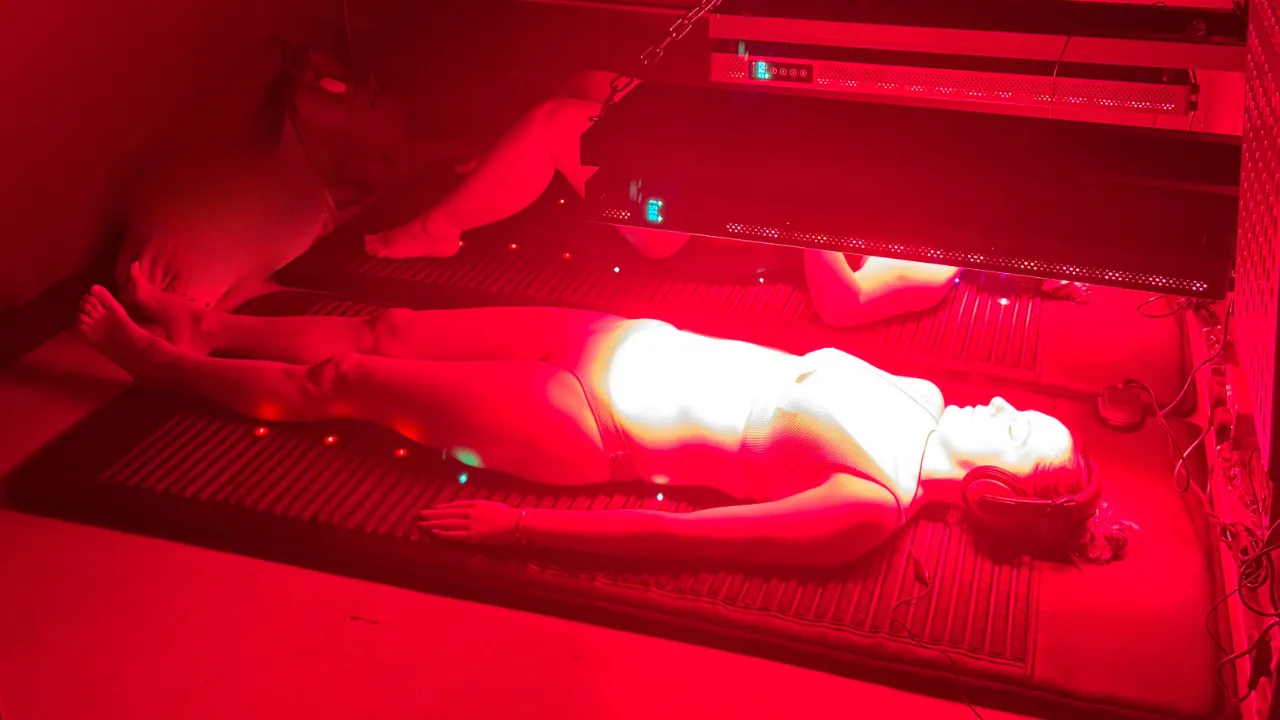
Jet lag is not just tiredness - it is a full circadian disruption affecting every system in your body, from cognitive function and reaction time to gut motility, immune function, and hormonal rhythms. At R1SE Sheffield, we offer a targeted recovery protocol using Red Light Therapy (for circadian resetting), Fire & Ice contrast therapy (for autonomic nervous system recalibration), HBOT (for cognitive recovery), and gentle movement - designed to cut your jet lag recovery time in half.
The circadian system takes approximately one day per time zone crossed to fully adjust - meaning a trip to New York costs 5 days of suboptimal performance, and Australia costs two weeks. Specific light wavelengths, temperature exposure, and exercise timing can dramatically accelerate this adjustment. Red Light at 630-670nm influences melatonin production without the blue-light alerting effect. Cold exposure resets autonomic nervous system tone. HBOT restores cerebral oxygenation that altitude and cabin pressure deplete. At R1SE, we use these evidence-backed tools strategically to get you back to peak function faster than rest alone ever could.
Your Multi-Therapy Plan
How R1SE Can Help
The Science
Evidence-based insights supporting our approach.
Jet lag causes measurable cognitive impairment: reaction time slows by up to 50%, decision-making accuracy drops 30%, and memory consolidation is significantly disrupted for every time zone crossed (Waterhouse et al., 2007, The Lancet).
Red Light at 630-670nm stimulates melatonin production without the alerting effects of blue light, making it an ideal chronotherapy tool for circadian adjustment. A 2019 study in the Journal of Athletic Training found red light therapy improved sleep quality and endurance performance.
Cold exposure resets the circadian clock through norepinephrine signalling in the suprachiasmatic nucleus (the brain's master clock). Timed cold exposure can accelerate time zone adjustment by up to 50% (Buhr et al., 2010, Science).
Cabin altitude equivalent (6,000-8,000 feet) reduces blood oxygen saturation to 90-93%, causing mild hypoxia that contributes to cognitive impairment, dehydration, and fatigue - effects that persist for 24-48 hours after landing (Aerospace Medicine and Human Performance).
Exercise timing is one of the strongest circadian synchronisers. Morning exercise accelerates eastward adjustment, while evening exercise accelerates westward adjustment (Youngstedt et al., 2019, Journal of Physiology).
The general rule for natural circadian adjustment is one day per time zone crossed, with eastward travel typically harder than westward. Active chronotherapy (light, temperature, exercise timing) can roughly halve this adjustment time.
Long-haul flights elevate inflammatory markers (IL-6, CRP) for 24-72 hours post-landing - the underlying driver of post-flight aching and immune suppression. HBOT, Red Light, and contrast therapy all measurably reduce these inflammatory markers.
Frequent business travellers (≥85 nights/year) show measurably worse cardiovascular, sleep, and metabolic markers than non-travelling controls - chronic jet lag is a recognised occupational health risk, not a minor inconvenience (Burkhart & Brown, Environmental Health, 2019).
Common Questions
Loading form...
You May Also Be Interested In
Ready to Start?
Whether you want to book a session, explore our recovery therapies, or speak to someone about a personalised plan - we are here for you.