Migraines
Fewer attacks. Less intensity.
Important: R1SE services are complementary wellness support, not medical treatment. Always consult your healthcare provider before starting any new programme, especially if you are under active medical care.
Migraines are not just headaches - they are a neurological condition that can steal days from your life. At R1SE Sheffield, we focus on prevention: reducing the triggers, building resilience in your nervous system, and offering therapies that target the vascular and inflammatory mechanisms behind migraine attacks.
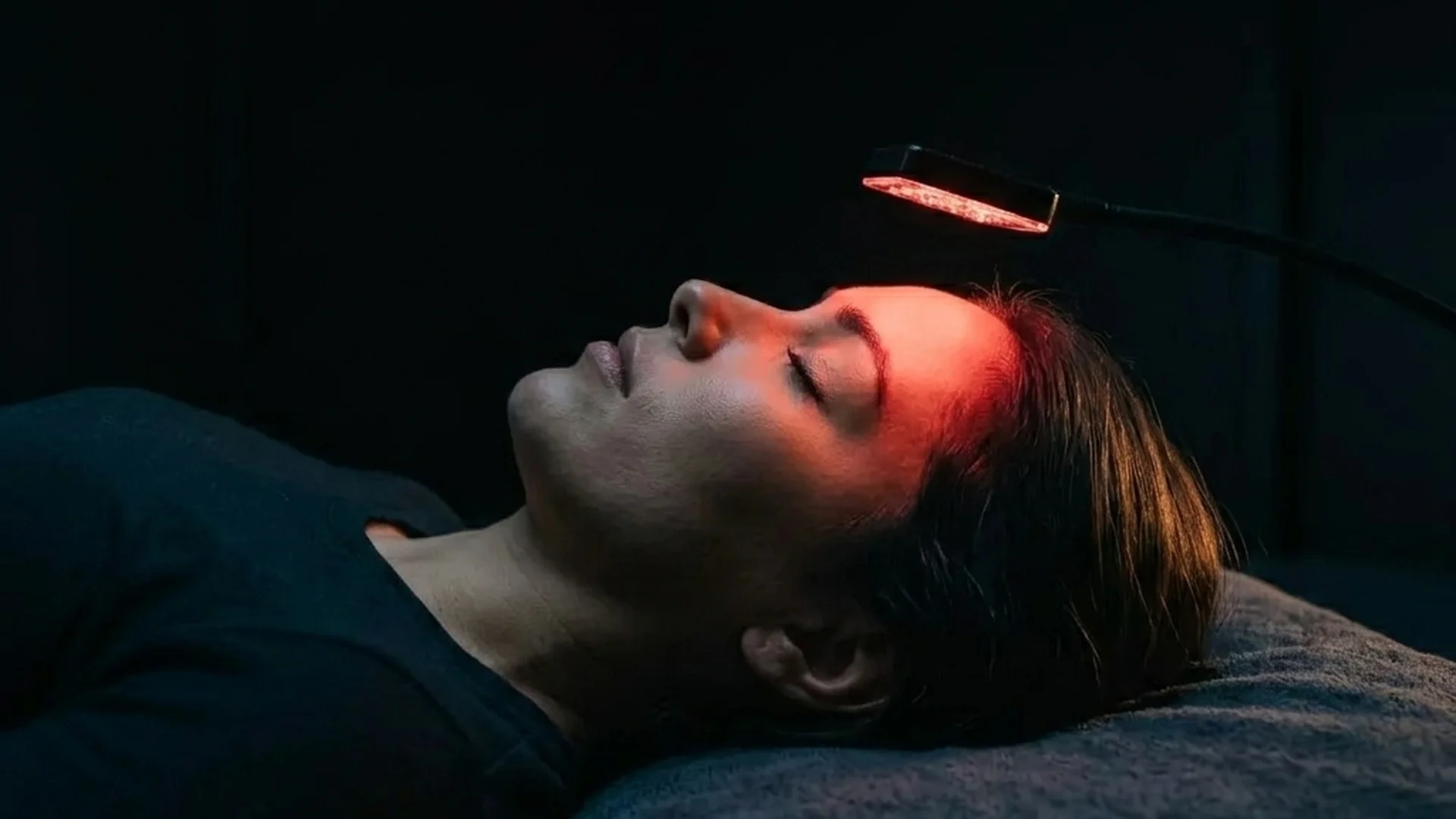
Migraine is best understood as an inherited disorder of sensory processing - the migraine brain is hyper-reactive to ordinary inputs (light, sound, hormones, stress, food, sleep change) and responds with a cascade of cortical spreading depression, trigeminovascular activation, neuroinflammation (driven by CGRP) and altered cerebral blood flow. This multi-system biology explains why prevention strategies that hit several mechanisms at once - the EU headache federation and NICE both now emphasise this - outperform single-target interventions. Exercise, stress-reduction, sleep regulation and cardiovascular conditioning each reduce attack frequency by 20-50% independently; stacked, they are transformative. At R1SE we build that stack: aerobic Hot Yoga for cardiovascular conditioning and cortisol regulation, Reformer work for postural drivers (cervical dysfunction is a common trigger), HBOT for the vascular component, and transcranial Red Light for the neuroinflammatory driver.
Your Multi-Therapy Plan
How R1SE Can Help
The Science
Evidence-based insights supporting our approach.
A 2008 Cochrane review (Bennett et al.) concluded that hyperbaric oxygen at 2.0-2.4 ATA significantly reduces acute migraine pain compared to sham - with effect sizes comparable to triptan medication but without their vasoconstrictor side effects. Preventive protocols are less well-studied but show promise.
Transcranial photobiomodulation at 810nm has shown encouraging results in pilot studies for chronic migraine prevention - reducing attack frequency and severity, likely via modulation of cortical excitability and mitochondrial function in neurons.
A randomised controlled trial of yoga in migraine (Kumar et al., 2020, Neurology) found 3 months of yoga as add-on therapy reduced attack frequency by 48% and pain intensity by 47% compared to medication alone - results were sustained at follow-up.
Regular aerobic exercise is recommended by NICE (CG150), the European Headache Federation and the American Migraine Foundation as first-line preventive treatment - with RCTs showing ~40% reduction in attack frequency independent of any pharmacological intervention (Varkey et al., 2011, Cephalalgia).
CGRP (calcitonin gene-related peptide) is the key inflammatory signalling molecule in migraine - the target of new preventive medications (erenumab, fremanezumab, rimegepant). Exercise and stress-reduction practices downregulate CGRP release, providing a direct mechanistic rationale for lifestyle interventions as genuine disease-modifying therapy.
Migraine brains show measurable mitochondrial dysfunction and altered cerebral blood flow between attacks (Welch et al., 1989, Neurology). Both HBOT and photobiomodulation target these biological abnormalities directly.
Common Questions
Loading form...
You May Also Be Interested In
Ready to Start?
Whether you want to book a session, explore our recovery therapies, or speak to someone about a personalised plan - we are here for you.