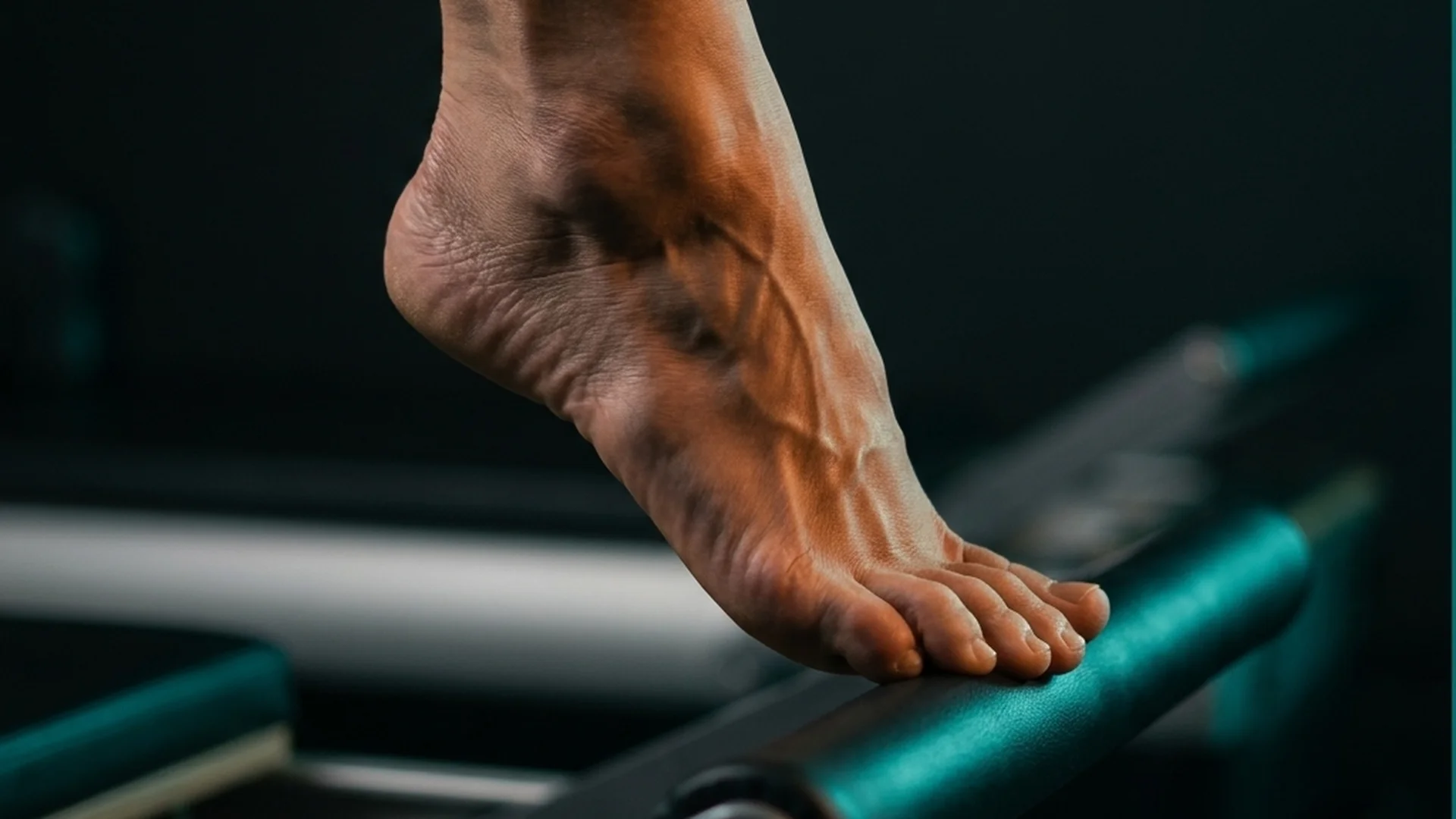
Plantar Fasciitis
Every step counts. Make them pain-free.
Important: R1SE services are complementary wellness support, not medical treatment. Always consult your healthcare provider before starting any new programme, especially if you are under active medical care.
Plantar fasciitis affects 1 in 10 people and is the most common cause of heel pain - yet conventional treatment (rest, insoles, steroid injections) fails roughly 25% of sufferers. At R1SE Sheffield we offer advanced recovery therapies including Red Light Therapy, HBOT, Compression Therapy, and targeted movement sessions that address the root causes: tissue degeneration, chronic inflammation, and the biomechanical imbalances that keep the cycle going.
Modern understanding of plantar fasciitis has shifted from 'inflammation' to 'fasciopathy' - the tissue is not just inflamed but structurally degraded, with collagen disorganisation and reduced blood supply. This is why rest alone rarely resolves it. Recovery requires stimulating tissue regeneration (which Red Light and HBOT excel at), improving blood flow to the avascular fascia, and correcting the calf, ankle, and hip mechanics that overload the plantar surface. R1SE's multi-therapy approach is uniquely positioned to address all of these simultaneously.
Your Multi-Therapy Plan
How R1SE Can Help
The Science
Evidence-based insights supporting our approach.
A 2018 systematic review in Lasers in Medical Science found photobiomodulation (Red Light Therapy) significantly reduced plantar fasciitis pain and improved tissue thickness, with effects comparable to steroid injection but without the tissue-weakening side effects.
HBOT promotes angiogenesis - the formation of new blood vessels - in hypoxic tissue. The plantar fascia is one of the most poorly vascularised structures in the body, making HBOT particularly relevant for fascia repair (Thom, 2011, Physiological Reviews).
Eccentric calf exercises (available on the Reformer) are the most evidence-backed exercise for plantar fasciitis, with a 2014 RCT in the Scandinavian Journal of Medicine & Science in Sports showing superior outcomes to traditional stretching.
Calf tightness is present in 83% of plantar fasciitis cases and is considered the primary modifiable risk factor. Heated stretching (as in Hot Yoga) increases tissue extensibility by up to 25% compared to cold stretching.
Plantar fasciitis affects approximately 10% of the population over a lifetime, with highest prevalence in runners (up to 22%) and people who spend prolonged time standing. It accounts for over 1 million GP visits per year in the UK.
Common Questions
Loading form...
You May Also Be Interested In
Ready to Start?
Whether you want to book a session, explore our recovery therapies, or speak to someone about a personalised plan - we are here for you.