Red Light Therapy
Light that heals. At every wavelength.
Important: R1SE services are complementary wellness support, not medical treatment. Always consult your healthcare provider before starting any new programme, especially if you are under active medical care.
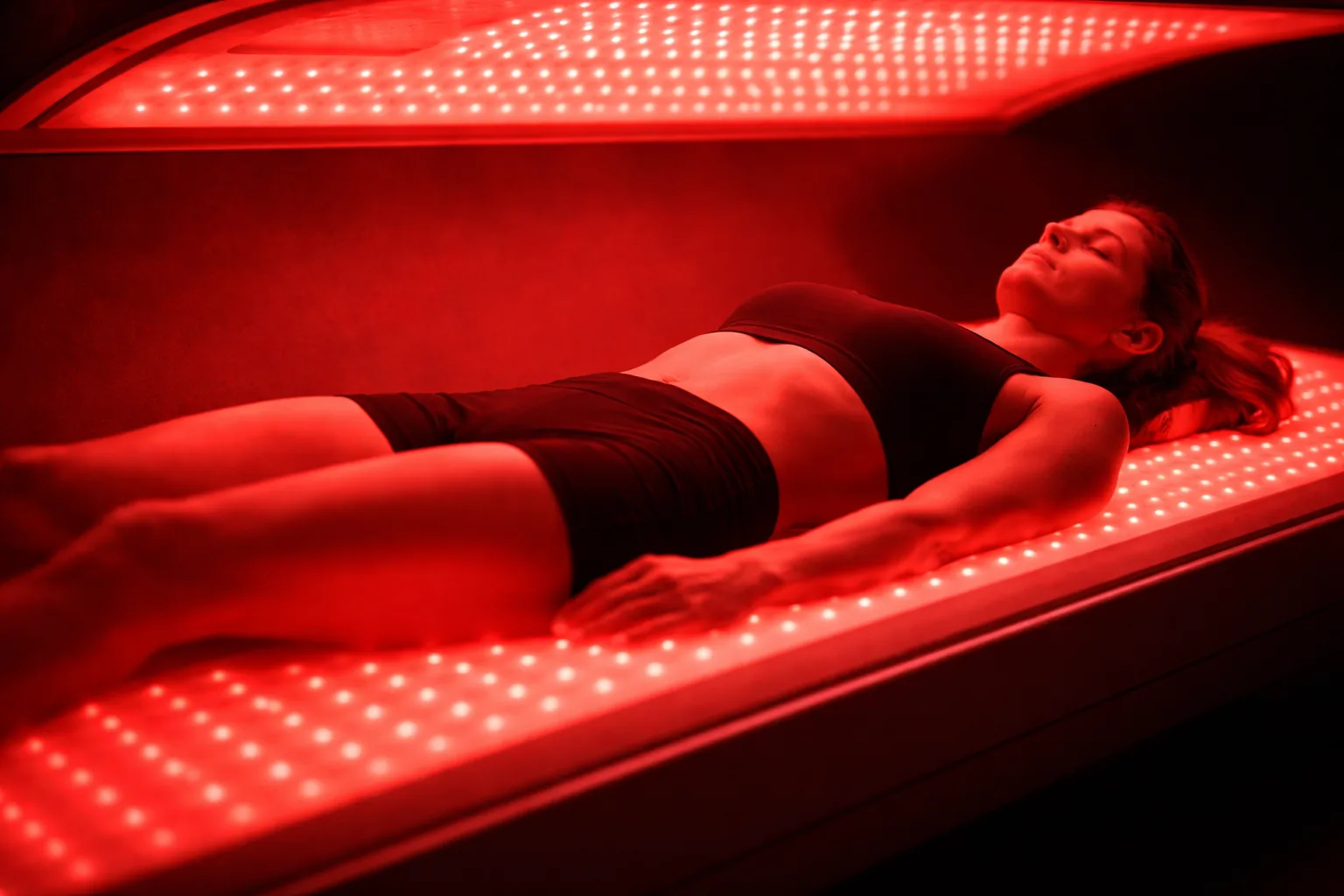
Red Light Therapy - also called photobiomodulation (PBM) - uses specific wavelengths of red (630nm) and near-infrared (850nm) light to stimulate cellular repair, reduce inflammation, and enhance mitochondrial energy production. At R1SE Sheffield, our clinical-grade LED panels deliver the precise wavelengths and power densities used in over 5,000 published clinical studies. Unlike any other therapy, Red Light works at the most fundamental level of biology - the mitochondria - making it relevant for virtually every condition, sport, and wellness goal.
The mechanism is elegant: photons at 630-850nm are absorbed by cytochrome c oxidase (Complex IV of the mitochondrial electron transport chain), releasing nitric oxide and increasing ATP production by 40-200%. This cellular energy boost triggers cascading effects: reduced inflammation (lower IL-6, TNF-a, COX-2), increased collagen synthesis, accelerated wound and nerve healing, improved circulation, and enhanced muscle recovery. At R1SE, Red Light Therapy is rarely used in isolation - it is combined with HBOT (which provides the oxygen mitochondria need to use the energy boost), exercise (which demands the ATP Red Light produces), and contrast therapy (which provides complementary hormetic stimulus).
Your Multi-Therapy Plan
How R1SE Can Help
The Science
Evidence-based insights supporting our approach.
Over 5,000 peer-reviewed clinical studies have been published on photobiomodulation (Red Light Therapy), making it one of the most researched complementary therapies in the world. The evidence base spans pain reduction, wound healing, inflammation, skin health, neurological function, and athletic performance.
Red Light at 630-850nm is absorbed by cytochrome c oxidase (Complex IV of the mitochondrial electron transport chain), displacing nitric oxide and increasing ATP production by 40-200% - directly boosting cellular energy (Hamblin, 2017, BBA Clinical).
A 2017 meta-analysis found photobiomodulation reduced delayed onset muscle soreness (DOMS) by 50% and improved strength recovery by 12% when applied within 6 hours of exercise (Borsa et al., Journal of Athletic Training).
Red Light Therapy at 830nm reduced thyroid antibodies by 44% in Hashimoto's patients (Hofling et al., 2013) - one of the strongest single-study findings for any complementary therapy for autoimmune conditions.
Photobiomodulation accelerates peripheral nerve regeneration by 250% compared to natural healing, through stimulation of Schwann cell proliferation and nerve growth factor (NGF) production (Anders et al., 2004, Lasers in Surgery and Medicine).
Red Light Therapy increased collagen density by 200% over 12 weeks in a clinical trial, significantly improving skin texture, fine lines, and tissue elasticity (Wunsch & Matuschka, 2014, Photomedicine and Laser Surgery).
A 2009 Cochrane review found Red Light Therapy reduced knee osteoarthritis pain by 50% - comparable to NSAIDs but without gastrointestinal side effects (Brosseau et al., Cochrane Database).
Transcranial photobiomodulation (near-infrared light applied to the head) improved cognitive scores by 18% in TBI patients - the photons penetrate the skull to reach injured brain tissue and support neural recovery (Naeser et al., 2019, Journal of Neurotrauma).
Common Questions
Loading form...
You May Also Be Interested In
Ready to Start?
Whether you want to book a session, explore our recovery therapies, or speak to someone about a personalised plan - we are here for you.