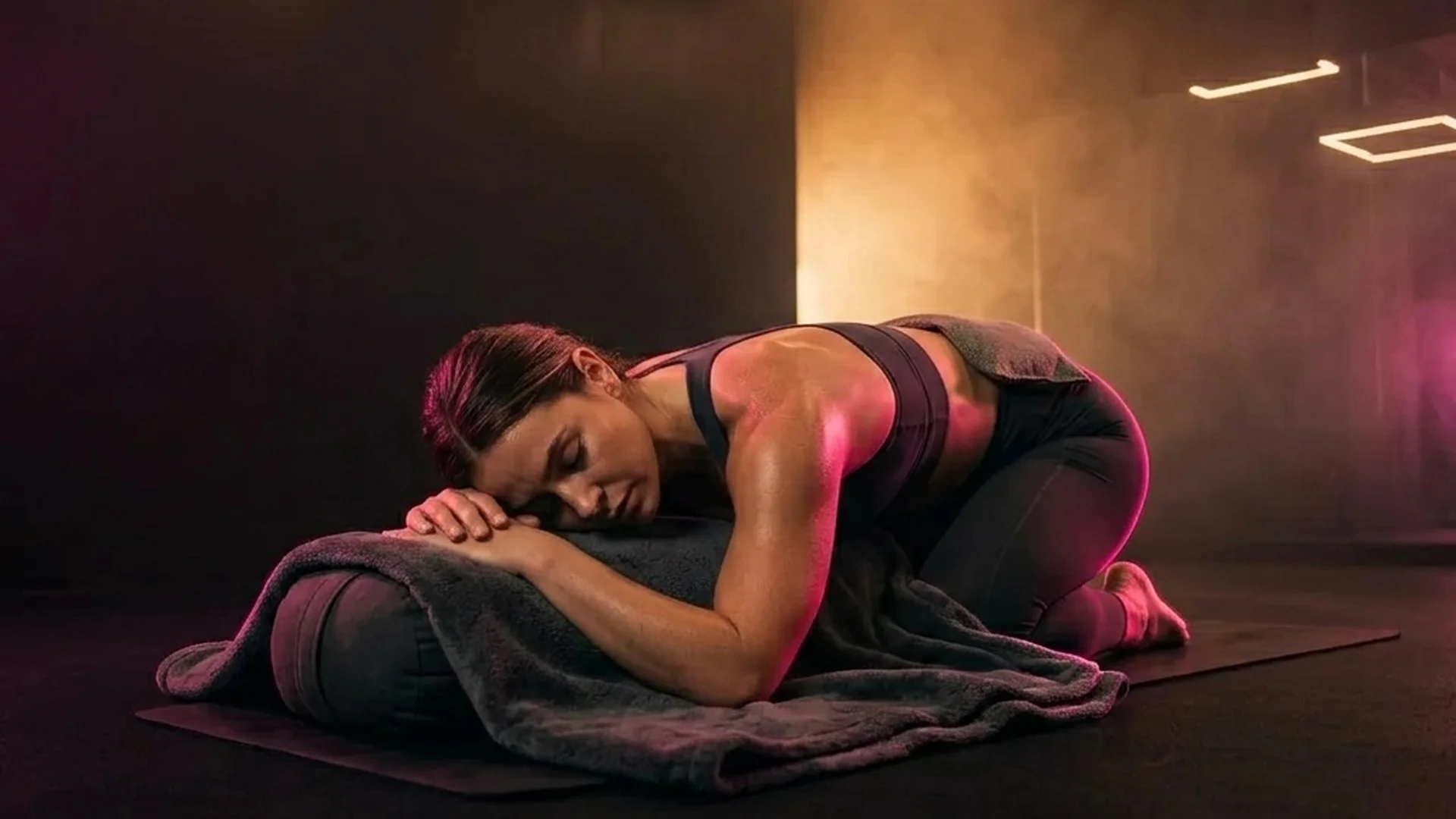
Period Pain & Cramps
Work with your cycle.
Important: R1SE services are complementary wellness support, not medical treatment. Always consult your healthcare provider before starting any new programme, especially if you are under active medical care.
Period pain affects up to 90% of women, and for around 20% it is severe enough to disrupt work, study, exercise, and daily life every single month. At R1SE Sheffield, we combine continuous heat therapy, Red Light Therapy, gentle yoga, infrared sauna, and Compression into drug-free approaches that target the actual mechanisms of dysmenorrhoea - uterine smooth-muscle spasm, prostaglandin overproduction, restricted pelvic blood flow, and accumulated pelvic-floor tension.
The Cochrane evidence is unambiguous: continuous heat is as effective as NSAIDs for period pain, with none of the gastrointestinal side effects. Yoga reduces menstrual pain intensity by up to 60% across multiple RCTs. Red light therapy at 830nm has measurable effects on uterine inflammation. And regular exercise across the cycle - not just during menstruation - reduces symptom severity, PMS, and the cumulative loss of training that monthly cramps create. Our approach gives you tools for the painful days, and a longer-term protocol that can fundamentally change how your cycle feels over 3-6 months.
Your Multi-Therapy Plan
How R1SE Can Help
The Science
Evidence-based insights supporting our approach.
A Cochrane systematic review (Akin et al., 2001; Igwea et al., 2016) found continuous heat therapy at 38.9°C was as effective as ibuprofen for primary dysmenorrhoea, with no gastrointestinal or cardiovascular side effects.
Multiple RCTs have shown yoga reduces menstrual pain intensity by up to 60% and reduces analgesic medication use, with effect sizes comparable to first-line pharmacological treatment (Yang & Kim, Journal of Alternative and Complementary Medicine, 2016).
Red light therapy at 830nm has demonstrated significant reduction in menstrual pain visual analogue scores in a randomised controlled trial published in Lasers in Medical Science, with effects sustained across multiple cycles.
Regular aerobic and resistance exercise across the cycle (3+ sessions per week) reduces dysmenorrhoea severity, PMS symptoms, and cycle-related mood disturbance over 8-12 weeks (BMJ Open Sport & Exercise Medicine, 2019).
Pelvic floor relaxation work and supine breath-led movement reduce the chronically elevated pelvic floor tone that drives both primary dysmenorrhoea and the subset of pain considered functional/myofascial in origin.
Endorphin release from sustained heat exposure (sauna, hot yoga) provides natural opioid-pathway analgesia for menstrual pain, and reduces the prostaglandin-driven inflammation that initiates uterine smooth-muscle spasm.
Up to 50% of women experience some loss of work or study capacity during menstruation each month - a productivity and quality-of-life burden equivalent to a chronic pain condition that the medical system frequently underestimates (BMJ, 2019).
Heart rate variability (HRV) drops in the late luteal and menstrual phases, reflecting reduced vagal tone. Yoga and breathwork measurably restore HRV across the cycle, smoothing cycle-related autonomic shifts.
Common Questions
Loading form...
You May Also Be Interested In
Ready to Start?
Whether you want to book a session, explore our recovery therapies, or speak to someone about a personalised plan - we are here for you.